 **Update: As of Thursday, May 7th, 2020 real estate is back to work with new safety restrictions**
Since the governor extended the stay at home order, it will be a while before we get back to functioning normally. If you were planning to buy or sell soon, you are probably curious about how the Coronavirus pandemic has affected real estate. THE PROCESS Real estate agents are not allowed to travel for work and can only work remotely. Buyers looking at homes is considered non-essential travel. This means no meeting clients in person and no looking at houses. The good news is that inspectors, lenders, and title companies are still functioning normally, aside from modifications for proper social distancing. Transactions in process had minimal interruptions as long as buyers were still working. Layoffs have caused some problems though.
1 Comment
 There is something about dolls that is inherently scary. It has to be the be the blank staring. The middle doll here is a great example. To amplify the terror, the dolls eyes are an eerie glowing green color. I guess their eyes can fade with sun exposure. To me, it looks like the doll wants to steal my soul. Pro tip- hide the dolls when you sell your house. Enjoy the photos below.
 Location is usually the most important thing to someone looking for a home. So how do you know whether a particular location is a good place to live? Can I just ask my Realtor?
Due to fair housing laws, there are a lot of questions Realtors cannot answer. The answer is subjective to each person's own experiences and expectations. Anything referring to the ages of people, racial make up, or safety of a neighborhood is off limits. Although we may not be able to answer a specific question, we can help guide buyers to information to form their own conclusions. The first thing I recommend to buyers is to go through a neighborhood at different times of the day to get a feel for it. The most important time is during rush hour to see traffic at its worst. The evening hours are great for catching neighbors out and about. I encourage buyers to talk to neighbors and ask questions.  So how's the market? It appears to be holding steady right now. The inventory of homes for sale is a little higher this year versus last, mainly due to softened buyer demand as prices have risen. It is still a seller's market and very competitive among buyers, but not quite to the extent of last year's spring market. I still regularly have buyers running into competitive situations with 10+ offers. Especially, in the $150-250k price range which has extremely high demand.
Interest rates also crept up over the last year to around 5%, but surprisingly, they came back down and are currently sitting around 4%. The number of new residential listings hitting the market is down by about 5% so far in 2019. Until this number starts to increase, our inventory will stay relatively low. Check out the chart below that illustrates the monthly inventory levels over the last five years.  Real estate was a wild ride this spring. Inventory hit an all time low at 0.9 months of inventory this past March. There was extreme competition among buyers in the $120-250k price ranges. Most of my home buyers searched for at least a few months and wrote multiple offers. I educate my buyers on the different criteria the seller will use to evaluate the offer, and we worked to their strong points as best as possible. For example, some people were flexible in their timing, so they offered sellers longer time to occupy the home after closing. Some were tight on timing, but could offer larger down payments and earnest money. All of my buyers were well prepared and writing strong offers.
 It has been a whole year since I wrote a real estate market update for the greater Grand Rapids area. Why? It has been the same story for the last two years straight. How many different ways can you say "we have extremely low inventory!"?
As a refresher, inventory is measured by months of supply. Months of supply is the measure of how many months it would take for the current inventory of homes on the market to sell, given the current pace of home sales. Months of supply is a good indicator of whether a particular real estate market is favoring buyers or sellers. Our local market has strongly favored sellers the last few years. Although the market has been great for sellers, it has been extremely difficult for buyers trying to purchase, especially first-time buyers who generally have lower down payments. 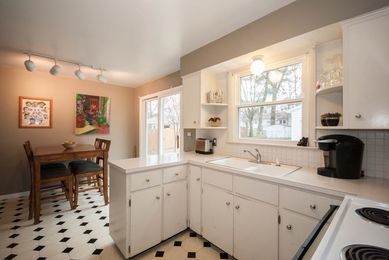 The article "I Bought a Condo and it Ruined My Life" was posted on Vice recently. It was shared on Facebook with the suggestion that "this is why millenials don't buy homes." Reading through this I couldn't help but notice the similarities of my own housing situation. I also purchased in 2006 at practically the same age, before the housing market crash. However, my outcome was extremely different than Mike Tunison. My house has been a wonderful financial investment.
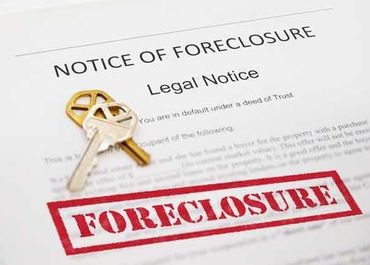 Zillow has a reputation for not being accurate and their "pre-foreclosures" are part of the problem. I get asked about these all the time by buyers. This home is not for sale. It is labeled as being in the process of foreclosure, but it is not a foreclosed property yet.
When someone stops paying their mortgage, the bank usually will threaten foreclosure after about 3 or 4 missed payments. Once this happens they schedule the property to go to auction at the courthouse. This auction is called the "sheriff's sale". Once the auction is scheduled, it must be printed in financial reports that are public record. Zillow claims they get this information from these financial reports.  It's spring cleaning time again. I don't know about you, but I haven't even started. Some tasks seem more daunting then they really are. The best thing to do is just start somewhere. Checklists and developing routines makes things more efficient and thus easier. Nothing is more satisfying than completing a project and checking it off a list. https://www.cleanmama.net/https://www.cleanmama.net/ is an awesome resource for cleaning and organization tips. There are a bunch of other checklists and such you can download for free on the website. Here are my top two favorite cleaning checklists-
GENERAL CONTRACTOR-
Ken Kuiper Homes, https://www.facebook.com/kenkuiperhomes/ 616-890-3250, kenkuiperhomes@gmail.com |
Lisa VanderLooGreat info on everything real estate. Categories
All
Archives
November 2023
|

 RSS Feed

|
© COPYRIGHT 2020. ALL RIGHTS RESERVED.
|